Friday, March 19, 2010

Snappin' Black Eyes: Warren E Kale and LaVina Row


I used to love this particular story as a girl, hoping that being lucky in love ran in families. I've heard it several times, and it seems like every time Grandma would tell me this story she would pull out a "pearl" necklace from her hope chest. But just in case my memory is failing me, I called Aunt Bonnie today to tell it to me again. The song, "Some Enchanted Evening" from South Pacific always comes to mind.

(me-->Dad-->Grandma LaVonne-->Bess Kale Van De Riet-->Lavina Row Kale).

For starters, I think Grandma LaVonne was named after Lavina, but I don't think Lavina capitalized the "V". Grandma LaVonne did know her grandmother because Grandma Kale/Stephens came to stay near (with?) them after her hubby died in 1945.  [I later found out that LaVonne was named after an Indian woman who was a Mormon convert, named LaVonne, up in Browning.  But they probably liked the name because it sounds like Lavina.]

In 1879,When Lavina was 16, her family lived in Indiana. She was a pretty girl and became engaged to a wonderful man named John Stephens, three years her senior. Alas, the plans of teenagers are often thwarted. Lavina's parents decided to move three whole states away to Kansas, and the engagement was broken.

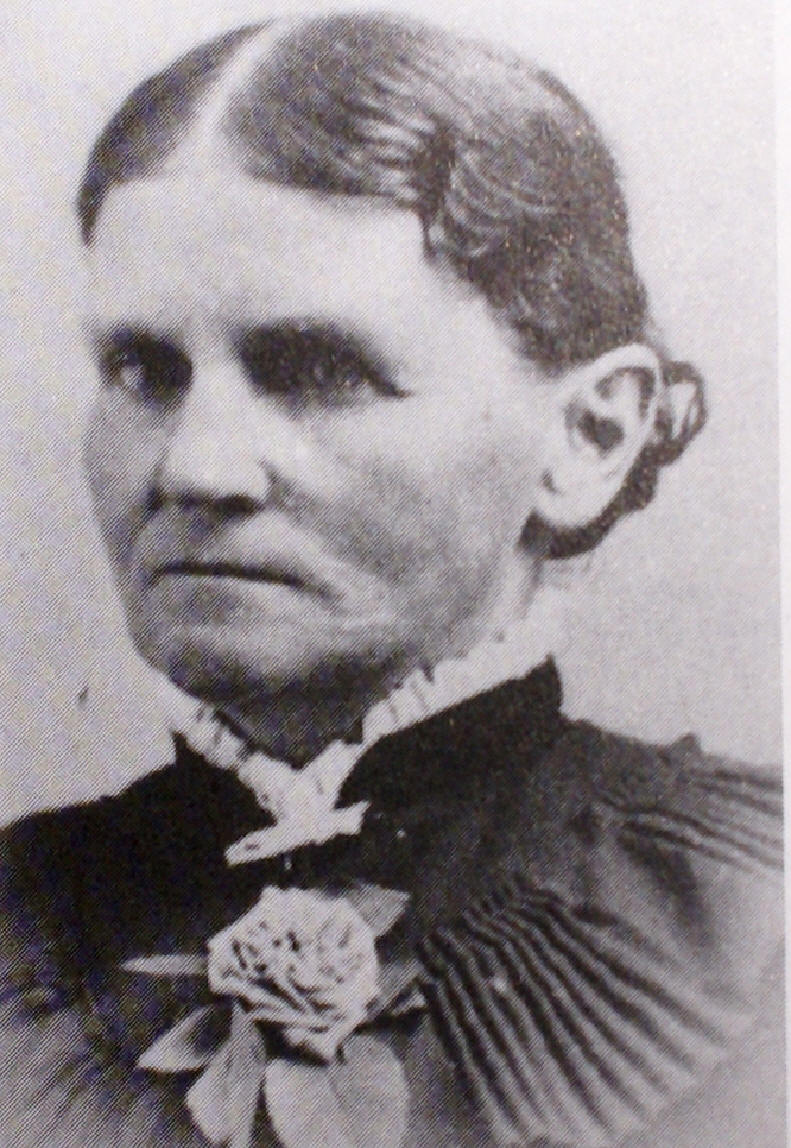
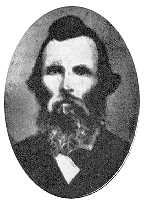
Kansas turned out to be not such a dreadful place after all. Now, here is where my imagination seems to take over the story, but I think Grandma told that Lavina was at a dance or a social function of some sort, and "across the crowded room" (just like in the song!!!) she saw this handsome man, who had "snappin' black eyes". I know that part is accurate and that my Grandma was quoting her Grandma. Aunt Bonnie said today, with a little emphatic sniff, "And you can just see from his picture, he did have snappin' black eyes!" He was a schoolteacher, nine years older than Lavina, named Warren Kale, born in Pennsylvania and raised in Ohio. And Lavina promptly forgot her heartache. (You can see from the pictures, that Lavina had beautiful, dreamy eyes herself, but I'm guessing they were light colored.)


Warren and Lavina were married on New Year's Day, 1883, when Lavina was almost twenty. The couple moved around Kansas a little and had three children, then after nine years an additional two, twins Jessie and Bessie. When the twins were about five years old, the family moved by train to Everson, Washington, in the extreme northwest part of the state, where Warren had accepted a teaching position. His brother C. Stewart Kale ran the Kale Cannery there, so they moved to be by family.

Around 1910, Lavina began a very difficult part of her life. Her daughter Jessie was suffering from some strange disease (the family now thinks it was probably leukemia) and doctors admonished the family to move to Montana for her health. It didn't help. Jessie died in 1913, and then Warren died only three years later. Lavina was a widow at 53.

Lavina still had Row cousins that were living in Indiana, and they had stayed in contact all those years. Someone blabbed, and John Stephens, now a widower, heard that Lavina was available. Now from a letter from Row relative Pearl Steiner. (Grandma had a copy...).

"My mother kept in touch with Lavina all these years. John Stephens ask[ed] my mother for her address and he wrote to Lavina and they decided to marry at this late day. Lavina went to her sister Cassie Devoes' home in Kansas and they were married there and came back to John's home south of Bowling Green Indiana."

It seems like Grandma would say that her "Grandpa" Stephens was oh so kind to her Grandma, and I think that he gave her a necklace that she would show me. Anyone else know for sure? When John died in 1945, Lavina moved back to Montana to live with Bess.

None of my kids have "snappin' black eyes", but my Grandma LaVonne sure did. I wonder where she got them?

Monday, February 22, 2010

75 and Dam Handsome: Ebert Roger Heagy


Happy 75th birthday Grandpa!

Here's a little short memory for you that, in my mind, characterizes so much of what is good in my Grandpa Heagy.

Our family likes to visit Gibson Dam. It's beautiful and isolated and not too far from where I grew up. Grandpa and Grandma Heagy come often because they love being in the mountains. One time, I must have been in junior high or high school, our family was watching the fury of water at the base of the dam. Grandpa convinced me that it would be okay for us to actually walk underneath the enormous double jets of water that shot out hundreds of feet from the dam, creating the entire Sun River. The whitewater always terrified me, and the roar of the water shooting out of those two pipes was thunderous, but right under the spouts, the rocks were high enough out of the water that you could walk across them if you kept right next to the wall of the dam. CRAZY! Not only was it terrifying to be underneath that much fast-moving water--it could have taken my head plumb off if I stood up straight--but the rocks were slippery and wet and water and spray dripped down on you. So of course, we did it, and Grandpa came with us.

When we reached the other side there was a small rocky bank against a cliff wall. We waved at our family, looked around, might have stacked a few rocks into a little cairn to prove we were there, and then scrambled back under the jets. Well, when we got back, much to our surprise, we had company. Some men in uniforms were there to chew us out. Park service? Dam employees? I don't remember. But they chewed Grandpa out with a stern warning never to do that again.

I wasn't really afraid of those guys, after all, I had just defied death. So what I remember most of all was my Grandpa's face. So polite and respectful but still smiling with those white Hollywood teeth.
Somehow I suspect that there have been a few more rock cairns built by visitors on the far side of the dam since that day.

Saturday, February 13, 2010

The Way was Opened for Us: Harriet Betsy Cook Teeples, part 2


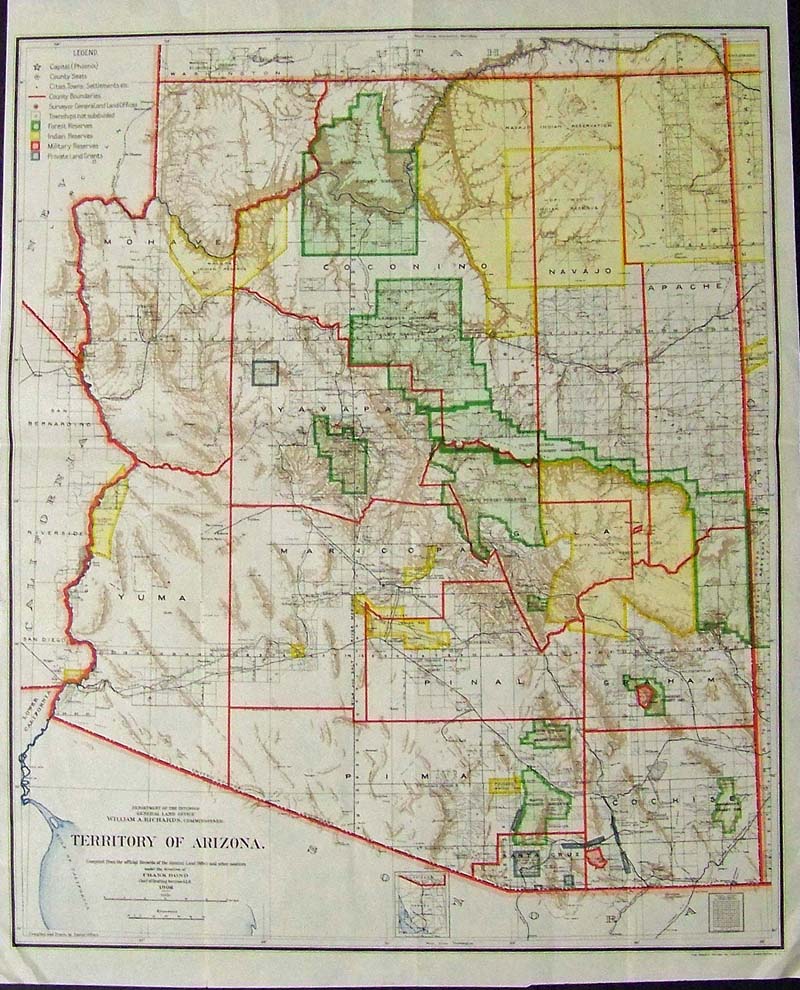
Harriet Betsy Cook Teeples only actually lived in Arizona for five years. She and her husband, William Randolph Teeples, settled in Pima, Arizona, which is south of Snowflake. Here is where my GGGrandma Eunice Rosella Teeples was born. While there Harriet took charge of a small store and post office that William built. They kept her very busy and often she had to stay up most of the night to receive the mail.

"After we had been at Pima nearly four years, my husband was taken dreadfully ill with an abscessed liver. After a long illness he died June 5, 1883 at the age of 49 years. His death was a heavy blow to me. I was left alone with five small children. The oldest being a boy of 13 years. [her daughter Beatrice had married by this time]. I was then appointed postmistress and kept it nearly a year, trying very hard to get out of debt and collect from the people who owed us, but made small progress in that direction. I turned the books over to my creditors in the spring of 1884 and they collected; I was very happy to know I was out of debt.
William Randolph Teeples

I decided to go back to my parents and friends in Utah. I resigned to post and prepared for our long journey, although I did not know how we were to go as we had no money to go on the train, which was 44 miles from Pima. However, we packed up our wagon and were all ready to start when a young man came along and said, "I will drive your wagon and furnish my own food if you will haul me and my bedding." He was from Utah and was there on a visit. His name was James McClellin, and thus the way was opened for us to come.

My son sold our cow for $40 and we started on the 28th day of April 18
84. We traveled four days. In the Magillan Mountains we came to the Black River, which is very deep. As the ferryboat was on the other side, the boys tried to swim a horse across, but the horse and mules all refused to go, so we camped there for four days waiting for help. About ten o'clock on the fourth morning we saw some soldiers coming at the head of 500 Indians who were moving to another reservation. One Indian, who was an excellent swimmer, swam the river and brought the boat back and they helped us across.

We traveled on ten miles to Fort Apache and camped near the Fort that night. Then the next morning we traveled on to Woodruff on the lead of the Little Colorado where my oldest daughter lived and here we rested a few days. Then, leaving her, we started on again and I did not see her again for 10 years. When we came near the Holdbrook Railroad Station we drove into a stream of water and stopped to let our horses drink. When we tried to start again the team could not pull the wagon out of the bottom of the stream a
s it proved to be quicksand and in trying to get out we broke the wagon tongue. The boys rushed to a farm nearby and got a farmer's team and pulled the wagon out backwards. The young man went to the station to see if he could get a wagon tongue. There happened to be just one tongue there and it fit our wagon. He obtained it and put it on the wagon and we started on our journey again."
Here is a link that includes a virtual walking tour of the current Fort Apache site.

"As we came to Sunset, one of our wagon wheels got out of order. This town had broken up and all the people had moved out except one man and he was waiting for someone to come back after him and his blacksmith tools. He repaired our wagon, but if we had been just a little later he would have been gone.

...We had to go over "Lee's Backbone" again, but I didn't drive this time. When we got over the big mountain and down the river, the ferryman told us we were taking our lives in our hands by crossing the river. There was only a small rowboat to cross in. This the two men rowed and my son held the halter rope and the horses had to swim. They took the boat upstream about a mile and started across, but the river was so rough and the pitching and tumbling timbers frightened the first horse so badly that he snorted, leaped, plunged, floundered, and pulled the boat downstream even with the wagon. I watched all this take place way out in the middle of the river and was so frightened it made me feel ill. I went out a little way from the wagon where I could not see them in the angry waters and I earnestly prayed that Father in Heaven would help us cross this river safely and be permitted to carry on our duty to him. When I arose and went back to the wagon I saw my son on the other side of the river holding his horse by the rope and swinging his hat to me. One fine horse refused to swim and almost drowned.

The river calmed down until the floating timbers were sliding along without a splash. When they came for the wagon I had dinner prepared for them. As they sat down to eat, the ferryman said, "Do you notice how calm this river has become? I have lived here 20 years and I have never seen this happen before. I can't account for it." But I knew why it was. We took the wagon apart and crossed the river nine times in moving our little outfit. The ferryman said he couldn't cross another outfit until the high water was over. But we were across and we went on our way rejoicing."

They continued into Utah, parted ways with James McLellin, and traveled until they were stopped at the Sevier River because of high water and stayed with friends.

"We heard that the bridge at Selma, 20 miles below, would be fixed the next day, so we unloaded our wagon and went there. The bridge was not fixed, but the bridge gang helped us across. We walked across two long logs, which had been put there for a footbridge. Over these the men carried our trunks and bedding and led our horses making them swim. They tied a long rope onto the wagon and pulled it across, then carried my two younger children over. They wouldn't take a cent, shook hands with us, told us good luck and we again went on rejoicing. We stopped at my husband's cousins' home that night and when he saw us coming he threw his cap in the air and shouted, "Hurrah for you! I didn't think you were so lucky!" and I said, "Well, when I make up my mind to do anything and ask for the help of the Lord, I generally do it."

The next day's travel included the incident where Eunice, age three, was thrown from the wagon and badly hurt. You can read about this in an earlier Story Apples posting, Bump in the Road: Eunice Rosella Teeples.

Harriet and her family traveled on and eventually re-settled in Garden city, Utah, where Harriet lived a long life, never again marrying. She lived the last four years of her life in Sun River, Montana, with her daughter Eunice McCann. She died at the age of 89.

It really shrinks history's time line for me when I realize that I knew my great-grandma LaRue McCann Ely who lived near us, and LaRue knew Harriet, her grandma, an honest-to-goodness, called-by-Brigham Young pioneer, crossing the plains as a child and then settling various areas as an adult. That's only two degrees of separation!

I've found that in my life, when things start to get into a really panicky situation but I've done everything I can do, then is the time to sit back and watch the fireworks--the Lord's hand in my life making things way better than I could have imagined or expected. This account really illustrates the fireworks concept for me. Harriet must have had great faith for the Lord to bless her so much and for her to see so clearly "by whose hand [she] was led." This could have been the worst, saddest time in her life, but in this journey alone I count seven separate miracles or obvious blessings from the Lord. Go back again and see if you can find them, then look back in your own life and see if you can find a few more. I bet you will.


Thursday, February 4, 2010

Desert Sojourner, part one: Harriet Betsy Cook Teeples


I recently finished reading The Undaunted by Gerald Lund, about the "Hole in the Rock" pioneers who built a trail across Southern Utah's treacherous red rock terrain. Then I had to go back and read Harriet Betsy Cook Teeples' account of being called to settle in Arizona, and her journey.

(Me-->Mom-->Grandma-->LaRue McCann Ely-->Eunice Rosella Teeples McCann-->Harriet Betsy Cook Teeples)

 Incidentally, Harriet is part of my straight maternal line, all mamas, so I always feel a special connection to these women, much like I do to my Paternal line, where everyone has the last name of Haynes.

I used to work for one of BYU's Academic Vice Presidents. She was from Arizona and her family's joke was that Brigham Young gave her ancestors the ultimatum, "You can go to Arizona or you can go to Hell." When the obedient pioneers arrived, they looked around and said, "I thought we picked Arizona!" Well, I think Grandma Harriet had a similar opinion. She had been living in Holden, Utah, (near Fillmore) when she and her husband had decided to move north to beautiful, green Garden City, near Bear Lake, where her parents lived. They sold out and packed up... 
"just as Apostle 'Rastus Snow came to Fillmore to call people to go to Arizona. Well, that was one of the trials of my life, but I did not refuse to go, but I could not leave Utah without bidding my folks goodbye, not knowing that I would never see them Again. So, while my husband was preparing to go to Arizona, I, with my four children started for Bear Lake in a white topped carriage and over the 300 mile journey, my second daughter, then 14 years old, was my teamster. We stayed in Bear Lake three weeks and then returned to Holden and from there we started for Arizona on the 29th of October 1878."
She sounds like a pretty determined (read here: stubborn) lady who wasn't afraid to go after what she wanted.

A little background on Harriet before I tell you the rest. At this point in her life she had already crossed the plains with her family when she was three years old, losing her older sister to Scarlet Fever and a baby sister born in Winter Quarters. She had lived in Salt Lake, Manti, Goshen (which was established by her father, Phineas Wolcott Cook) where she was married at the age of fifteen to William Randolph Teeples, shown here. They lived in Salem and then Provo. In 1863, when she was 19, she and her husband and little girl were called to settle the Bear Lake area with her father's family (he was a polygamist). This was a 300 mile journey and has its own stories to tell, another time. They lived there for two years and then moved back about 400 miles south, to Holden, to escape the harsh winters in 1865, where they stayed for the next twelve years. Over this time she had six more children, losing a four year old son when a falling log killed him, her eldest daughter at age fifteen to the measles, and a baby who only lived for a month. So, Harriet and William and their four children were leaving for Arizona at ages 44, 34, 14, 9, 5, and thirteen months. I'm guessing that her daughter Beatrice, at 14, was a lifesaver.
" We traveled past Kanab and Johnson Settlement and on down to Colorado [River]. The people there told us to cook enough food to last 3-4 days for everything near the river was petrified to stone—and we found this true.
As the river was low, they had a ferryboat that would hold one team and a wagon, so the company of twelve wagons all crossed in one day. When we were ready to go over the big mountain called “Lee’s Backbone” we found the road up the side of it to be a series of stone stairs. It was one mile to the top and was so steep that we had to use all the teams on one wagon. At the top there was along a one mile long and very narrow dugway, so very narrow that the wagon wheels would be within six inches of the edge and we could look down and see the steep side of the mountain and see the river more than 500 feet below. I drove a gentle team around this dugway with my baby in my lap.
When we got around the top of this mountain we stopped on a flat place, tied all the wheels and got ready to start down the south side of the mountain. My husband told me to stay and he would come back for me. I stayed a few minutes and then started down. On making a sharp bend around a big rock, one wheel struck it. With much effort I got by this and soon met my husband coming back after me, and he said, “How in the world did you get around that rock?” I told him and he said, “You’ll do!” We camped at the foot of the mountain that night and started south the next morning over very rough roads and wild country. Water was very scarce. We had to haul it in barrels and many times our cattle and horses were very thirsty.
We crossed the Little Colorado River by fording it as the water was very low, but we had to hurry as it had a quicksand bottom.
When we came to Brigham City on the west side of the river we were invited to dinner in the large dining room of the United Order as many of our friends were there. From there we went up along the side of the river passing Snowflake and Showlow Creek and finally on christmas Day we stopped at a place called Cluff's Ranch. We had known the Cluffs in Utah, so we felt wehad some friends there and we pitched our tents there for the winter.
"Walking Arizona" is a great blog by John Tanner that discusses several of these sites and their histories, with photos, some seen here. The red cliff picture is part of the trail of Lee's Backbone, which is right next to Lee's Ferry. Here is a little bit from James Tanner's Walking Arizona blog that talks more about this horrible cliffside road.
"At the time, future LDS Church President, Wilford Woodruff, who visited this area several times, in his diary described the backbone as "The worst hill Ridge or Mountain that I Ever attempted to Cross with a team and waggon on Earth. We had 4 Horses on a waggon of 1,500 lb. weight and for two rods we Could ownly gain from 4 inches to 24 with all the power of the horses & two men rolling at the hind wheels and going Down on the other side was still more Steep rocky and sandy which would make it much worse than going up on the North side. The trip down the backbone and across the river tested one's resolve to continue the trip. As one weary traveler observed, If Mr. Lee had a backbone as bad as that I surely pity him. It didn't seem possible for the horses to pull the wagons up as the road was so sleep and the boulders so big, and it was just as bad on the dugway on the other side. Everyone who ever came over that piece of road had great cause for thankfulness they were not killed."
Also, there is a restoration project for Brigham City, Arizona, right now, and here is one of the buildings from it. Is it the large United Order dining room? I don't know.
The last picture is of a Reservoir on Cluff's Ranch, five miles from Pima, where Harriet eventually settled. I don't know if it existed at the time or if it is manmade, but it shows the area a little.

Sunday, January 10, 2010

They shall not have my gun: Hiram Hale

On to some of Hiram's war stories.

[Me>Dad>LaVonne>Harry Van De Riet>Sarah Elmyra Hale>Hiram Hale]

I actually have a copy of a chapter from some Civil War reference book (sorry, can't find the title at the moment) with a chapter "Historical Sketch, thirty-sixth Regiment Iowa Volunteer Infantry". The last few pages has the roster of the different companies. Company E lists the four Hale brothers: Greenville, Henry, Hiram, and John. They all enlisted in the Ottumwa area of Iowa, January 4, 1864, about a year and a half before the war ended. Greenville was the eldest at age 43, with 8 children already. Hiram was 38 with 6 children, including my gggrandma Sarah. Henry was 28 and didn't come home. He was married but I haven't researched if he had any children. John was 26 and also married.  We also know that Hiram's brother James "Riley" served in Illinois, where he lived near his wife's family.  Riley did come home safely.  In all, that makes FIVE brothers serving.

The Historical Sketch over the time period when Hiram served was actually written in a series of reports by his commander, Lieutenant Colonel F.M. Drake. Drake is also a family name, but I don't think this one is a close relation. Anyway, he writes that the new recruits of 1864 came immediately to the encampment at Little Rock Arkansas to join their "expedition". He writes,  
"The expedition was, as you are aware, a very hard one and, in many respects, disastrous. During this expedition the regiment participated in the battles of Elkin's Ford, Prairie D'Ane, Camden, Mark's Mills, and Jenkins' Ferry, acquitting itself with honor in every battle, and at Elkin's Ford and Mark's Mills with glory."
Lots of military maneuvering occurs, and then comes the fateful battle of Mark's Mills.
 "On the morning of the 25th of April, the train was attacked while crossing Moro Swamp, by a rebel force under General Fagan, eight thousand strong, and a terrible and bloody battle ensued, at the junction of the Warren and Camden roads, near Mark's Mills. The battle lasted until noon, the rebel force outnumbering us about six to one. We were not whipped, but finally overpowered and captured, myself being severely wounded and a large proportion of my command either killed or wounded. The Thirty-sixth Iowa went into the fight with about five hundred men, and lost, in killed and wounded, nearly two hundred men. The remainder are now in prison at Tyler, Texas."
The math on these numbers doesn't quite work out, but the book says that in the official report of the battle, Lieutenant Colonel Drake gives the number of his command as closely approximating fifteen hundred, and estimates that of the enemy at not less than six thousand. He states that only one hundred fifty of his command escaped, the rest--including the wounded--being made prisoners. He also commends the men for
 "their good conduct, and the bravery and fortitude which they displayed in the face of the overwhelming numbers of the enemy, continuing to fight until their ammunition was exhausted, and then conducting a hand to hand fight until borne down by sheer weight of numbers and compelled to surrender. No greater gallantry was shown upon any battlefield of the war."
I know that was long, but thank me for sifting through for the good stuff. If you haven't figured it out yet, three of the four brothers were taken prisoner (John escaped capture). They were held in a horrible prison camp at Tyler, Texas. There is a little bit of confusion on this point because Aunt Min Van De Riet wrote a little commemorative poem about her Grandpa being in the Libby prison, which is actually in Virginia, nowhere close to this entire regiment. The camp at Tyler is called Camp Ford. I'm confident this is the right prison because of the official record and also because Hiram's brother Henry who died there is buried in the nearby National Cemetery in Alexandria, Lousiana, and I'm sure the brothers were together. Maybe they also called Camp Ford the Libby Camp for some reason??? I guess I need to call the History Detectives on PBS.

To fill in this story a little, I have a letter to "Dear Niece LaVonne" (my grandma), yellowed, torn and missing the last page so I don't know who it is actually from, (one of her Dad's siblings) but it is dated 24 Feb 1960. It seems to be a response to a letter Grandma wrote asking for information about her ancestors. Here is what this Hale relative writes.
"Grandpa Hale didn't die in the prison camp his brother did.[Henry died of disease after four months.] But they were treated like hogs in prison. They would open the window and drive up with a load of corn and shovel it in. That is what they got to eat. Grandpa had a $5 bill hid in his boot and he gave it to someone for a crust of bread. They could only have a drink of water at a certain time if they went oftener, the soldiers were there ready to shoot them. Mother said some would go there just to get shot. They suffered so much. Grandma said that is what caused Grandpa to shake so much. In a picture of them Grandpa's hands are blurred caused from shaking."
A few years ago I had some correspondence with a distant Hale cousin, Kathy Leeson, and she had the following information for me.
 "Hiram, John, Henry & Greenville Hale served in the Civil War. All except John were captured at the Battle of Marks Hill, & served in the Rebel Prison in Tyler, Texas for 10 months. Hiram was quoted saying, 'The Rebels shall not have my gun' and stuck it in the crack of an old log hut and broke it before being captured."
 Yeah, that's the kind of sheer stubborness I am proud flows through my veins.

Sunday, December 20, 2009

Just Across the River: Hiram and Mary Ann Poole Hale


Hiram Hale and his wife, Mary Ann Poole Hale
(Me-->Dad-->LaVonne-->Harry Van De Riet-->Sarah Elmyra Hale-->Hiram Hale)

I have a little soft spot for this particular ancestor of mine. Hiram Hale was the first ancestor that I really thoroughly researched when I was first learning how to do genealogy at BYU. I guess I was interested in him because Hale is also Emma Smith's (the wife of Joseph Smith, founder of the Church of Jesus Christ of Latter-Day Saints) last name. After lots of checking, I know that we are not related to the Emma Hale Smith family except for a long shot, probably back in England a few hundred years ago. The interesting and relevant part, though, is that Hiram and his wife Mary Ann were contemporaries of Emma, Joseph, Brigham Young, and all those people so important to my Mormon heritage, but they were NOT Mormon. AND they had to be aware of the dramatic happenings in the Mormon community at that time because they lived just two counties away from Nauvoo, Illinois, across the Mississippi in Wapello, Iowa. They also knew that they had a fleeting connection with Emma--that her maiden name was Hale--and they sympathized with the awful stories they heard about her mistreatment at the hands of the leaders. At least, I THINK they knew she was a Hale. Grandma LaVonne, a convert, used to say that her family's opinion of the Mormon church was not very good because, "They treated Emma just awful, and she was a Hale, you know." That is the extent of what I know of their opinions of the whole Mormon drama that unfolded at their doorstop, but I wish I could have asked them more about it. Hiram and Mary Ann were both pretty young at the time...they got married in 1847, just a couple of weeks after Brigham Young's company reached the Salt Lake valley. I would love to know if their families were among those that helped the starving Saints who were trying to cross Iowa.

I've had a little fun imagining what the Hales and the Pooles may have thought about the Mormons, and what they must think now that their descendants have joined the throngs. My favorite moment was when I took a copy of this photo into a print shop in Provo, Utah, to get it redone,etc. A big, loud man with a thick Southern accent was standing behind me in line and saw my photos. He pointed and said, "Those yo' ancestahs?" Yeah, I nodded proudly. "They was Mo'mon?" I snickered a little and said, "No, they probably shot at the Mormons." The entire shop went dead silent. I just laughed. It's the proud rebel in me.

I'll have to post more later about Hiram and his Civil War stories.

Sunday, November 15, 2009

Dancing to Heaven: Lucy Elzada Hardy

Here are some excerpts from the life of Lucy Elzada Hardy Cheney, pioneer. The story I have been most inspired by since I've had children of my own is that she had her first baby in the back of a wagon on a pile of flour sacks. I wish I had her picture, but I think her imagined face is the one I have in mind when I sit serenely on my crisp hospital bed, receiving my epidural. I think she's saying, "Oh honey! Take the drugs! Take 'em for me!"

I also remember Grandma Pearl talking about her Grandma Cheney dancing to death, and thought, what a happy way to go, surrounded by your granddaughters in your best dress and dancing on into heaven.
(Me-->Dad-->Grandpa-->Pearl Drake-->Mary Jane Cheney-->Lucy Elzada Hardy)

From an interview of Pearl Drake Haynes, written by her niece Ortell Drake Wilson.


-->
…My Grandmother Cheney [Lucy Elzada Hardy Cheney] lived with us a lot. My mother is Mary Jane Cheney. That’s where you get the Marys. (This to Mary Kaye, Pearl’s daughter.)
My mother never lived polygamy, she said that is one thing she couldn’t do. Grandpa Cheney died young and my Grandma never remarried. She had her first child on the plains. The pioneers had hard times, I’ll tell you. When she had the baby she was laying on barrels of flour. The captain said they should put the flour in bags to make a softer bed, which they did. I was about fourteen or fifteen years old when she came to visit and she told me this....
-->
Here is a picture someone shared of Lucy.
Now I’ll tell you a little bit about my Grandmother Cheney. The night that Grandma Cheney died, that day she got all her nice blouses out and ironed them all up. She used to have some beautiful blouses and she loved to iron them. Her granddaughter asked why she was ironing her blouses and she said, “I’m going to a wedding tonight. You’ll see.” My grandmother was a great dancer and she loved to dance. That evening she told her grandchildren or great-grandchildren, I guess, to all line up on the over-stuffed and she would dance for them because she was going to this wedding and she would dance before she left. So she did and she said, “Well, I’m getting kind of tired. Move over some of you, and let me sit down.” She sat down and passed away on the sofa. She was a great entertainer. At a ward old folks’ party, they had my grandmother and her oldest daughter dance for them. They gave a dance recital. She was honored for being the oldest at this party."
Also, from the "Life Story of Ezekial Wells Cheney and Lucy Elizada Hardy Cheney", by Arlene Ellis Melis.
-->
Lucy was born February 24, 1829, at Bellfast, Waldo County, Maine. She was the daughter of Zachariah Hardy and Eliza Philbrook Hardy. This family also journeyed to Nauvoo and shared with the Saints in the persecutions of the mobs. Lucy's mother was a seamstress and during the family's stay at Nauvoo she made clothes for the Prophet's family. Lucy, being seventeen years of age at this time, worked for the Prophet's mother, showing mummy exhibits to people who paid to see them. When the family left Nauvoo, Lucy's father died of exposure as a result of battling the icy waters of the Mississippi while helping the Saints to cross. When the saints were burying Zachariah Hardy they were molested by the mob and had to leave him at the graveside and return later to bury him secretly at night. Many of the Saints were forced to leave Nauvoo with only those belongings that they could carry in their arms. Lucy's mother, Eliza had seven children when she fled from Nauvoo and was carrying the youngest in her arms.

Ezekial and Lucy were married at North Mt. Pisgah in March 1848. They had met at Winter Quarters where they had gathered with the Saints after being driven from Nauvoo. They were married when Ezekial was twenty years old and Lucy was nineteen. A year after their marriage, in 1849 they left Winter Quarters, with Ezekial's father Aaron, and traveled to Utah in what was known as George A. Smith's Company. Brother Smith was a cousin of the Prophet. On the way they suffered many hardships but fortunately were not molested by Indians. Three weeks after they left Winter Quarters, their first child was born near Elkhorn, Nebraska. They named the baby Eliza Ann.