Tuesday, November 30, 2010

Notorious: Don't Mess with Granny Hannah!


I'm reading a book right now that talks a bit about Cotton Mather (remember reading that awful stuff in English class, "Sinners in the Hands of an Angry God") and life in Puritan America. It reminded me that I haven't actually written about my most notorious ancestor, Hannah Webster Emerson Dustin. Who? You may ask. Well, she has been written, sculpted, painted, admired and feared, and the surest sign of notoriety--featured on Wikipedia. She has also had several things named after her, including an island in New Hampshire, a modern Massachusetts quilt guild, even a locomotive! I am seriously geeking out over all the cool original artifacts, documents, and stuff about her online, but I'll try to limit it to just a bite here. Many of the photos are from Hannahdustin.com. To read the "full" story of her amazing, bloody adventure, click here.

(Me>Dad>Grandpa>Pearl Drake Haynes>Mary Jane Cheney>Ezekiel Wells Cheney>Aaron Cheney>Benjamin Cheney>Joseph Cheney>Daniel Cheney>Hannah Dustin Cheney>Hannah Webster Emerson Dustin.)

Hannah and her husband Thomas were settlers in Haverhill, Massachusetts at an extremely hazardous time. The scandalous Salem Witch trials had taken place just five years earlier in 1692, and 141 "witches" were arrested in neighboring towns. Part of the fury of the trials stemmed from the widespread fear of plague (small pox) and very frequent Indian attacks where settlers were kidnapped and taken to Canada for slavery or ransom, or killed. For this reason, Thomas Dustin (or Duston or Durston, depending on which record you read) was asked by the Massachusetts govt. to build and run a "garrison house" out of brick. The house still stands and serves as a Museum in the summer months.

This garrison house was a ways off from the Dustin home and still under construction in the morning hours of March 16, 1697. Hannah, about age 40, had given birth to her twelfth child, Martha, a few days earlier, and was still recovering in the house with her baby and her neighbor, Mary Neff, serving as nurse. Thomas was out doing chores and spotted the Indians approaching. He grabbed his gun, mounted his horse and shouted to the children to make for the garrison. He didn't make it to the house in time to save Hannah, baby Martha and the nurse, but was able to provide cover for his other 8 as they ran for safety under the fire of arrows. He didn't fire a shot because the Indians knew how long it would take him to reload. All 8 children made it to safety, the elder helping the younger (no doubt greatly aided by his teenage daughter Hannah who later married a Cheney and became our ancestor as well.) Twenty-seven others in other neighboring households were killed, and 13 kidnapped.
This rescuing father had the honor of capturing the imagination of Nathaniel Hawthorne,(another English class persona; remember The Scarlet Letter? also a native Massachusett who probably grew up hearing this story, but maybe not the part about not firing his weapon) who drew this illustration of Thomas and the children when he wrote an article about Hannah in his American Magazine of Useful and Entertaining Knowledge. The scene is also portrayed at the base of the two Hannah Dustin monuments. So, back to Hannah, Martha and Mary.

The Indians invaded the house, looted it, dragged Hannah (with only one shoe on), Mary and the baby from the house, and set it on fire.


The Abenaki killed baby Martha as soon as they saw she would not allow the women to keep up, and then marched the women into the woods to regroup with the other marauders. The captives were marched at top speed about a dozen miles that first day, through patches of snow and mud and across icy streams. They continued on their strenuous journey north for about two more weeks, until they reached what is now Dustin Island, (near currentPenacook), near the convergence of the Contoocook and Merrimack rivers in New Hampshire. The island was home to Hannah's captor and a few of the others, and they planned to rest there for a few days before continuing to Canada. One of the other Indians there, named "Bampico", spoke English and had kept a young teenage boy, Samuel Lennardson, captive for about 18 months. When Samuel met Hannah and Mary and heard of Hannah's determination to escape the horrors awaiting (particularly running the gauntlet), he became part of their plan. Here is the story of what happened next, as written by the Duston family association and found at hannahdustin.com.
Samuel, who was growing tired of living with the Indians, and in whom a longing for home had been stirred by the presence of the two women, the next day casually asked his master, Bampico, how he had killed the English. "Strike 'em dere," said Bampico, touching his temple, and then proceeded to show the boy how to take a scalp. This information was communicated to the women, and they quickly agreed on the details of the plan. ...
After reaching the island, the Indians grew careless. The river was in flood. Samuel was considered one of the family, and the two women were considered too worn out to attempt escape, so no watch was set that night and the Indians slept soundly. Hannah had decided that the time had come.
Shortly after midnight she woke Mrs. Neff and Samuel. Each, armed with a tomahawk, crept silently to a position near the heads of the the sleeping Indians - Samuel near Bampico and Hannah near her master. At a signal for Hannah the tomahawks fell, and so swiftly and surely did they perform their work of destruction that ten of the twelve Indians were killed outright, only two - a severely wounded squaw and a boy whom they had intended to take captive - escaping into the woods.
Hastily piling food and weapons into a canoe, including the gun of Hannah's late master and the tomahawk with which she had killed him, they scuttled the rest of the canoes and set out down the Merrimack River. Suddenly realizing that without proof their story would seem incredible, Hannah ordered a return to the island, where they scalped their victims, wrapping the trophies in cloth which had been cut from Hannah's loom at the time of the capture, and again set out down the river each taking a turn at guiding the frail craft while the others slept.
Thus, traveling by night and hiding by day, they finally reached the home of John Lovewell in old Dunstable, now a part of Nashua, N.H. Here they spent the night, and a monument was erected here in 1902, commemorating the event. The following morning the journey was resumed and the weary voyagers at last beached their canoe at Bradley's Cove, where Creek Brook flows into the Merrimack. Continuing their journey on foot, they at last reached Haverhill in safety. Their reunion with loved ones who had given them up for lost can better be imagined than described. Doubtless Samuel was the hero of the younger generation for many days.
Thomas took his wife and the others to the new house which he had been building at the time of the massacre, and which was now completed. Here for some days they rested.
After recovering, Hannah and Thomas set out for Boston with Samuel, Mary and the scalps, where Hannah would tell her story and receive some compensation for the burning of her home. 

Here he filed a petition to the Governor and Council, which was read on June 8, 1697 in the House (Mass. Archives, Vol. 70, p. 350), setting forth the above belief and claiming the reward, pleading that "the merit of the Action remains the same" and claiming that "your Petitioner haveing Lost his Estate in that Calamity wherein his wife was carryed into her captivity redrs him the fitter object for what consideracon the publick Bounty shall judge proper for what hath been herein done," etc.
The same day the General Court voted payment of a bounty of twenty-five pounds "unto Thomas Dunston of Haverhill, on behalf of Hannah his wife," and twelve pounds ten shillings each to Mary Neff and Samuel.
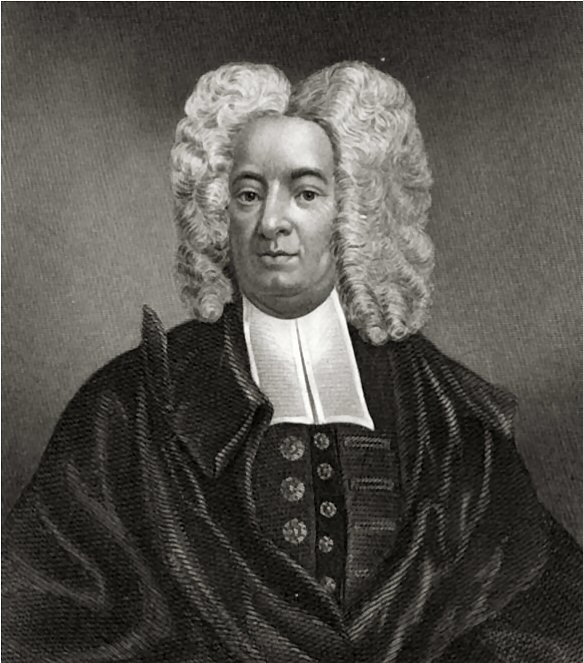
While in Boston Hannah told her story to Rev. Cotton Mather, whose morbid mind was stirred to its depths. He perceived her escape in the nature of a miracle, and his description of it in his "Magnalia Christi Americana" is extraordinary, though in the facts doubtless quite correct and corroborated by the evidence.
Cotton Mather, who I mentioned earlier, was basically the villain of the Salem Witch Trials, but hey, I guess even a villain can tell a good story. By recording Hannah's story, he brought her adventure to a much larger audience, and allowed other authors to retell it as well. Nathaniel Hawthorne, as mentioned, but also the poet John Greenleaf Whittier, Henry David Thoreau, and even DC Comics got a piece of Hannah's pie, in a 1957 edition of Wonder Woman, in a romanticized feature called "Fabulous Females".

The part of this story that troubles me is that some of Hannah's victims were children. I read that Samuel killed Bampico first, then Hannah killed her captor--the man who had bashed her baby against a tree, but I don't know who killed the other eight. I'm guessing it was Hannah since she got most of the bounty money. I can imagine that she was highly motivated by revenge, but I also hope that maybe she somehow thought it would be a mercy? Maybe the little ones would die without their parents? Maybe it was young Samuel, a "child" himself, who did it. I don't know. The people at that time also thought Indians were no better than animals. Or maybe there really was danger that the children would give an alarm.

One last artifact may shed a little light on Hannah's feelings about this. In the early 1929, a Haverhill Congregational church was being renovated, and its vault cleaned out. Inside was a letter that Hannah wrote to the elders of that church in1724, 27 years after her capture. What a find!! She was asking the elders for reinstatement to the church. I attached the full letter here (how often do you get to read about what your 17th century female ancestor's favorite scriptures were, for example?) but the part that stuck out to me was that in all that time, she hadn't felt worthy, "fearing I should give offence & fearing my own unworthiness has kept me back". I wonder if that means she felt any godly sorrow for what she had done? Maybe she was referring to something else entirely, but that is how I picture it in my mind. Enjoy her letter, and also the shot of the Hannah Duston train.

“I desire to be Thankful that I was born in a
Land of Light & Baptized when I was Young; and
had a Good Education by My Father, Tho I took
but little Notice of it in the time of it; -I am
Thankful for my Captivity, twas the Comfortablest
time that ever I had; In my Affliction God made
his Word Comfortable to me. I remembered 43d
ps.ult-- and those words came to my mind—
ps118.17….I have had a great Desire to come to
the Ordinance of the Lord's Supper a Great While
but fearing I should give offence & fearing my
own unworthiness has kept me back; reading a
book concerning Suffering Did much awaken
me. In the 55th of Isa. beg. We are invited to
come; --Hearing Mr. Moody preach out of ye 3d of
Mal. 3 last verses it put me upon Consideration.
Ye 11th of Matthew has been Encouraging to me-I
have been resolving to offer my Self from time to
time ever since the Settlement of the present
Ministry; I was awakened by the first Sacram 'l
Sermon (Luke 14.17) But Delays and fears
prevailed upon me; - But I desire to delay no
longer, being Sensible it is My Duty-, I desire the
Church to receive me tho' it be the eleventh hour;
and pray for me-- that I may hon'r God and obtain
the Salvation of my Soul.
Hannah Dustin wife of Thomas Aetat 67"

Tuesday, October 19, 2010

Peacemaking President: Pearl Drake Haynes

I'm reading a book right now called Before the Dawn by Dean Hughes, about this tough, ornery farm widow who gets called to be the Relief Society President of her LDS ward during the Great Depression. In the middle of laughing my head off and seeing glimpses of several tough women I've known, I realized that I never shared the story that Aunt Mary Loomis contributed about her mom, my Great Grandma Pearl.

Me-->Dad-->Grandpa Happy Jack-->Pearl Drake Haynes

I knew my Grandma Pearl, who passed away at age 99 when I was in high school, but I never realized that she had served two missions with my great-grandpa Harry for the Church of Jesus Christ of Latter-Day Saints, one to Florida and one to the Gulf States Mission, where they served in Louisiana (this second mission was cut short due to Grandpa Harry's health). I don't know much about what type of missionary work Harry was doing, but I'm sure it was an opportunity he cherished since he had joined the church after marrying Pearl and never served a regular mission as a young man. Pearl seems to have had a very specific calling, at least in one of her areas, as you will see. Aunt Mary gave me a copy of a talk by Mary's daughter Joey, that was given at HER mission farewell, and she discusses Grandma Pearl.

-->
“My grandmother was the same kind of woman. She had a rock solid testimony. There were no gray areas. Her code of living the gospel was black and white. She and grandpa served two missions. I interviewed grandma about her missions in her 97th year. Her mind was clear and she readily talked about her missions. Her first mission was to Florida. She was 71 years old, and Grandpa was 75. Jim and I had the privilege to listen to her being set apart by Elder Spencer W. Kimball. In his gentle blessing, he assured Grandmother that all would go well.
On grandma’s 2nd mission, at age 76, she was asked to be a Relief Society President. There were difficulties among the ladies and several of them were not speaking to each other. Grandma was asked to restore goodwill and harmony. Grandma called a meeting for Tuesday to meet them, and some of them said, “We’re not coming.” Grandma said, “I’d like to put a quilt on.” They said, “Nobody will quilt for you.” Then when Grandma put the quilt on with tacks, one of the sisters again said, “Well, I’m not coming.” Grandma calmly said, “that’s alright, the quilt will be here.” Grandma said, “I had them all loving each other before I was done.” She had the problem solved in two months time. The mission president said it was a miracle.
-->
Grandpa was 80 years old when they completed the 2nd mission. At the end of this interview, I asked Grandma if she thought it was worth it to serve these missions and she said, “You betcha.”

I love that as a missionary she used her hands and no-nonsense attitude to bring about solve some spiritual problems. I think I remember her working on a quilt or two at my Grandma Haynes' house. (And I like that story because I also like to quilt and actually use a pair of scissors she gave my Grandma Haynes for a wedding gift.)
Here is a copy of the picture of Harry and Pearl that was printed in the Church News for their 65th anniversary, in the eighties sometime. I may edit it later (when I'm using a smarter computer...) But for now, here is what it says.
"Harry R. and Pearl Drake Haynes. "We have always shared our blessings and our trials. The Lord has been good to us." --Harry R. Haynes
Married 65 years ago on June 12, 1917. Later sealed in the Salt Lake Temple. He fulfilled two stake mission calls and together they served two years in the Florida Mission and six months in the Gulf States Mission. Parents of five children (four living) and have 20 grandchildren and 50 great-grandchildren. They now live in Mesa, Ariz., where they attend temple regularly. Retired from farming in Fairfield, Mont. "
Of course, now they probably have more great-grandchildren and certainly many more great-great grandchildren.

Monday, September 6, 2010

A Line of Mothers


I enjoyed making my mom a birthday card this year that included a photographic record of our maternal line. I'm proud to be from this line of beautiful, tough, faithful women, often unacknowledged. I'm just as much a part of them as I am a Haynes-my father's father's father's line. (maybe I'll have to hunt down some photos for that sometime...) Last names are fun, but they definitely tend to drown out most of the picture. Can you identify who is who in this line of women?
Macy
Jaclyn
Lori
Beverly
LaRue
Eunice
Harriet
Ann Eliza

Tuesday, August 10, 2010

Houseboat Hooky: Martha Justine Cooper Heagy


I had a wonderful time with my grandpa Ebert Heagy going through some of his original old photos and documents. One of the treasures we unearthed was a notebook ledger that contained some family and personal history written by his grandma, Martha Justine Cooper Heagy, in 1942. It was fun to learn more about her, even if she only wrote a few pages. We took some digital photos of the journal pages and I uploaded them onto footnote.com, if anyone would like to read them in their entirety or print them out.

I also included this family picture of Grandma Martha as a Mom, I don't know who all of the people are in this picture and am too lazy to look it up right now, but the Dad is Charles Samuel Heagy (He looks a bit like my Uncle Scott to me, who even used to wear a mustache in the 80s.) The striking young man behind him is my Great-Grandpa Charles Aaron Samuel Heagy, who I've already written a little about.

(Me>mom>Grandpa Heagy> Charles Aaron Samuel Heagy>Martha Justine Cooper Heagy)

Here is a little of what she says about her father, Thomas Benton Cooper's unusual livelihood.

-->His mother [Emily Coffin Cooper] hired him out to a shoe maker to sit all day on a bench making shoes. After working at it for a while he decided it was not the life for him; so he ran away from home and went to Chicago where he found work on boats that moved on the Ill. and Michigan Canal and on the Ill. river. He later owned three fleets of boats and a good freight business.
Apparently that was good enough for Martha's mother, Swedish immigrant Christina Bloom, because she married him when she was 17 and he was about 23.


-->
She later went to Peoria to work, where she met my father, Thos. Cooper, and they were married there when she was seventeen yrs old.
They lived on one or the other of their boats for 41 (forty one) years, and all we children were born there. Lydia, Fred, Martha lived to be old. Gilmore lived eighteen months old. Aaron Peter eight yrs old and John Vincent five yrs old. Aaron and Vincent died one week apart of diphtheria in 1885 [when Martha was about 20].
My fathers boats used to be loaded with corn or oats or clay at different towns along the Ill river and canal and taken to Chicago, and lumber or hard coal taken from Chicago to towns on the route from spring till fall.
When freezing weather came the boats would stop at some town and we children would go to school.
We enjoyed only five months of school each year until we were old enough to board away from our parents.
I remember always liking a picture book of a little girl who lived on a houseboat that I think Grandpa Heagy used to have at his house. I never dreamed that his Grandma was a little girl just like that! My mom told me not long ago that she always liked visiting the Heagy side of the family as a little girl--that they were a hoot. I wonder if they got some of their fun from this girl who played hooky every year?


Friday, July 2, 2010

Accosted and Threatened: George Bentley Teeples

After recently completing the book, Joseph Smith: Rough Stone Rolling, I wanted to learn more about some of my ancestors who were his contemporaries. I did a quick check in the index of the Joseph Smith Papers, Vol. 1,1832-1839, and found that it mentioned George Bentley Teeples. I also found some interesting details about his life online and thought he deserved some discussion.
George Bentley Teeples

(Me>Mom>Grandma>LaRue McCann Ely>Eunice R. Teeples McCann>William R. Teeples>George Bentley Teeples)

Joseph Smith's journal, dated 9 Sep. 1838 describes the activities of the mobs in and around Far West Missouri.
"The mob continue to take prisoners at their pleasure some they keep and some they let go, they try all in their power to make us commit the first act of violence they frequently send in word that they are torturing the prisoners to death, in the most aggravating manner, but we understand all their ways, and their cunning and wisdom is not past finding out."
A footnote to that entry, sourced from a letter dated June 10, 1838, to Joseph Smith and Sidney Rigdon by Austin A. King (no doubt keeping them apprised of the situation), mentions that
"Missouri vigilantes in and around Daviess County also accosted and threatened Latter-day Saints George Teeples, Asahel Lathrop, John Murdock, and Rufus Allen around this time."

I hadn't realized that I had any ancestors that were part of the Missouri persecutions. George Teeples himself described a little bit more of what happened to him. I found this snippet of an article from Church History in the Fulness of Times, p. 196

-->

Tensions Grow in Daviess County

In spite of Joseph's willingness to be tried and his search for ways to prevent further conflict, the anger of the mobs was not abated. Daviess County settlers wanted to be rid of the Mormons and now increased their efforts. General Parks wrote that there were steady threats from the settlers, and that "Their intention is to drive the Mormons with powder and lead from this county" (General Parks to David Atchison, 25 Sep 1838, Millport, as cited by Anderson, p. 38). George B. Teeples, a Mormon in Daviess County, said that the settlers there "had resolved that there should not one of our people live in that county, and that they would give me four days to leave the county" (as cited by Anderson, pp. 38-39). Tensions were building toward war.
George was also one of the many saints who submitted an affidavit complaint, as requested by church leadership, "relating to Mormon difficulties in Missouri from 1831 to 1839 that were submitted to the House Judiciary Committee seeking redress for damages done in Missouri." BYU has an online index of these affidavits, and George Teeples is listed as follows:

-->
Affidavit re: flight from Clay County and depredations in Daviess county and Battle of Millport.
Warsaw, Hancock, Illinois, January 6, 1840.

So, George was in Daviess County, Missouri, then Hancock County, Illinois. He also shows up later in some records about a little known settlement called Summer Quarters or Brigham's Farm, just 13 miles north of Winter Quarters, Nebraska. Summer Quarters was used as farm land to grow food for the departing Saints, and was under the direction of Brigham Young's adopted son, John D. Lee. The Journal of Mormon History v. 32 had an article about Summer Quarters and its High Council governance that included some interesting details about George Teeples, taken from the High Council minutes. 
"the council also heard George B. Teeples complain that Solomon Wixom had lied, engaged in unchristianlike conduct, and 'stolen' his seventeen-year old daughter, Harriet. [not to be confused with his daughter-in-law Harriet B. Cook] Since Wixom had been sealed to Harriet, presumably by Brigham Young, no wrong had been committed and Teeples withdrew his charge. (From High Council and Stout, Jan. 29, 1848.)"
I wish I knew the rest of that juicy story, but when I looked up his daughter Harriet, it appears that she had a child with this Solomon Wixom and then divorced him. Father knows best! In any case, George was a fearsome father-in-law, like a few others I could mention.
George is the old man with the beard and hat on the left.

I don't think George's response to his daughter's elopement had anything to do with opposition to marriage in and of itself, because George ended up with (probably) six wives (according to the records on familysearch.org). 1. Huldah Clarinda Colby who was his first wife and mother to most of his children. He shares his gravestone with her. 2. Joanna Case Worden, who bore him 4 children. 3. Eunice Colby, Huldah's older sister. 4. Lena Sutton 5. Henrietta Ulster 6. Harriet Worchester.
George Bentley Teeples crossed the plains with his family in the same wagon train as the widow Mary Fielding Smith, (mother of Prophet Joseph F. Smith) and was one of the earliest settlers of Provo, Utah. He settled some other areas of Utah as well as fulfilling a settlement mission to the short-lived Fort Supply in Wyoming. Eventually he ended up in Holden. To prove it, here are some photos of his grave.
-->

When I saw that George and Huldah are buried in Holden, Utah, I decided it would be fun to make a little side trip on the way to Fillmore over Memorial Day for my husband's family reunion. Holden is a beautiful little town right off the freeway, full of trees and kind of hilly. We had fun playing treasure hunt in the city cemetery, and after noticing a few other Teeples graves, finally found George and Huldah. They share a headstone, the inscriptions on opposite sides. Their stone has a "Faith in Every Footstep" emblem on it at the bottom of Huldah's inscription placed by (I suppose) the Daughters of the Utah Pioneers , pointing out the pioneers that walked across the plains to Utah.

Tuesday, June 22, 2010

Right to remain silent: Harriet's other side

I was searching for a little more information about the Teeples branch of the family after I wrote about Harriet Betsy Cook Teeples. When I Googled her husband, William Randolph Teeples, much to my surprise I found some information about him posted by a different side of the family. The information was pretty much the same as what I already had from Harriet's detailed autobiography...except that this branch of the family were descended from one of William's other wives. Come to find out, he actually had three. And our Grandma Harriet never breathed a word about it! I also knew that Harriet's father, Phineas Wolcott Cook, had several wives, and she never bothered to mention that, either.

At first you might think this may mean she was very uncomfortable living plural marriage, (maybe she was, I don't know,) but in actuality she had probably schooled herself not to speak of it in order to protect her family from the law. I know that her father spent a lot of time in hiding, as an outlaw for living plural marriage (as did President John Taylor), even had a special cabin where he hid near Logan, Utah that is supposedly still standing. Maybe Harriet was just worried that someone would use her words as proof against someone she loved.

I've been honing my research skills and was studying a textbook that included some tips about errors in the Federal Census records. One example was that often the Utah Censuses from back in the day were inaccurate because the subjects were concerned that they would be prosecuted if the government could prove, through their census responses, that they were breaking the law of the land by living polygamy--the higher law that God gave them for a period of time (discontinued in 1890) to establish "a righteous race" to prepare for the Second Coming. Often, if a second wife was living in the same household as the first, they would call them Aunt or Daughter or something else on the form where it asked for "relationship to head of household". And I'm sure they squirmed at having to do that! I know I was so careful filling out our census form, with as much as I have poured over other censuses from my ancestors' time. Now I'm curious to go back and see if any of my polygamous ancestors had to hide from the law on their census form, and what kind of answers they put!

I'm certainly glad that I'm not asked to live that particular law, but the more I learn about how things really were back then, the easier it sits in my mind. I know that only some members were asked to practice it, and even then they could refuse if they wanted. From accounts that I've read, though, they were asked to pray about it first and would usually receive a spiritual confirmation that they would be doing the right thing and would be blessed immeasurably for taking on this particular challenge. For example, one of my friends who studied women's history in college has mentioned how advanced the women's rights and opportunities were in the state of Utah compared to the rest of the nation, mostly because they had other women to share the load. I think that even more than establishing families, the importance of the early Saints living this law was to test their mettle and try their obedience, like Abraham sacrificing his only son. I'm glad that I'm not asked to, but I hope I would have had the courage and selflessness to do the will of the Lord, no matter how impossible it seemed.

So, Grandma Harriet, I wonder what you thought, and I wish you could have told us, but I'm glad that you were good enough to do what needed to be done.

Sunday, May 23, 2010

The Bodyguard: Zachariah Hardy

I just finished reading a book about the prophet Joseph Smith that made me want to learn a little bit more about my ancestors, from both sides of my family, who were all tied up in his history, sometimes in surprising ways. I love knowing that my ancestors lived in such a glorious/impossibly difficult time and that they came through it all that much stronger. Even more, though, I love finding connections. It is natural as part of the human family to love connections. Don't we always ask people if they know so-and-so from such-and-such a place, as soon as we find out they've been there, too?

It fascinates me to no end to know that some of my ancestors, from different branches of the family, knew each other and were going through the same experiences, living in the same places at the same time. My family members even knew my husband's family members way back then (he is descended from some of the more well-known members of the church, such as Edward Partridge, the first bishop and Amasa Lyman, one of the first apostles.) I love the happy glow I get when it's a small world after all. I've known about Joseph Smith all my life, and believe wholeheartedly that he really talked to God and restored his church. Of course I'm going to be excited if I can make a personal connection to this man.
Enough gushing, on with the story.
(Me->Dad->Grandpa Happy Jack->Pearl Drake->Mary Jane Cheney->Lucy Elzada Hardy->Zachariah Hardy)

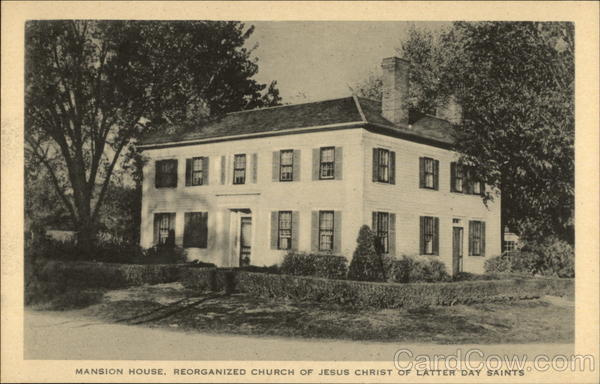
The book I was reading mentioned the Mansion House in Nauvoo, so I was thinking about Lucy Elzada Hardy Cheney, who worked there as a teenager for the prophet's mother, giving tours of the mummies and Egyptian artifacts .
The Mansion House was part home of Joseph Smith's family (including his mother) part hotel. When I learned that two other young ladies working at the Mansion House--the Partridge sisters--actually married Joseph Smith under Emma's sanction, I must admit I had to give a passing thought to how things could have worked out so differently for our Lucy.

I am happy to announce that I found Lucy Hardy Cheney's picture, as a much older woman, of course. Isn't the internet wonderful? Then, in the course of my search, I also found this lovely biography about her father and mother, who I had known basically nothing about, other than that her mother, Eliza Philbrook Hardy was a seamstress for the Prophet's family. Whaddayaknow, Lucy's father, Zachariah Hardy was actually one of the Prophet Joseph Smith's bodyguards. (For all you gentiles, this is a little bit like finding out your ancestor was a bodyguard for Abraham Lincoln or George Washington.) I feel that much closer to the history of the man who changed the world, and my life, forever. I also wonder what kind of personal blow it would have been to Zachariah when the Prophet was martyred, knowing that he was going to his death willingly and that there was nothing he could do about it, even though it was his calling to protect him. Zachariah also gave his life to the cause not long after.
The following is part of the Hardy history I found at the Rootsweb Freepages, posted by Linda Hardy.

"Zachariah Hardy

BIOGRAPHY: Zachariah Hardy was a martyr to the cause of the Latter-Day-Saints in Nauvoo, Illinois. He ferried wagons across the Mississippi River dieing from exposure to cold on February 13, 1846. We don't know all of the facts; that is, how many days it took to ferry the Saints across the river, but we do know that the first wagons crossed February 4th and continued into March. Zachariah was dead nine days after February 4th. He was 47 years old. Here is a copy of the records passed down to us, by the great-grandchildren of Zachariah and his wife Eliza Philbrook.
Three generations of the Hardys lived in Camden, Maine and in the islands off the coast of Maine. Zachariah Hardy, was born in Belfast, Waldo, Maine on 12 March 1779, and died 13 February 1846 in a small town called Montrose, Iowa just across the river from Nauvoo, Illinois. He was the son of Joseph and Betsy (Elizabeth) Thorndyke Hardy who were also born in or near Belfast, Maine. Zachariah married Eliza Philbrook of whom we have very little records, however of little consequence, it was known that she could knit and did for a living when she came out West with the Saints. Eliza was born 25 July 1807 in Belfast, Maine and died in Hooper, Utah 5 January 1881. Joseph Hardy was a sea captain in a large fishing and trading or freighting vessel which traversed the Eastern seacoast from New York to Maine, sometimes being away from home for many months. He was also a carpenter and ship builder and in these trades his three sons became very expert and followed these until they left their native home to answer the call of the West. In 1840 the last of the oldest generation, Joseph Hardy, who was almost 100 years old, died. His death made it possible for the next two generations to migrate to Nauvoo, Illinois. They first heard the Gospel preached by Elder William Hyde, in Searsmont, Maine, a little town near their home and where they afterwards moved to. Elder Hyde's sermon impressed them very deeply and they were soon converted and baptized into the Church of Jesus Christ of Latter-Day-Saints in August 1840. Early the next year they joined a company of Latter-Day Saints who were going west to Nauvoo, Illinois to be with the main body of the church. They left farms, comfortable homes and all they possessed, taking with them only what they could haul in wagons.
....The first person they met upon their arrival at Nauvoo was the Prophet Joseph Smith with whom they became intimately acquainted. Zachariah Hardy was chosen to be a body guard for the prophet and held this position until the Prophet's death.

.... At the time of the martrydom Zachariah was among the first to reach the scene of the tragedy. This event threw the saints into grief and confusion until Brigham Young took command of the Church, determined to lead them west. Immediately they were caught up in preparation to move. Part of the preparation was building flat boats large enough for horses and wagons to board. These flatboats had to be ferried across the river. Originally because the Hardy's were carpenters and shipbuilders, Zachariah was called to go with the first company as rafts and bridges were needed to cross the many rivers going west which would be swollen in the early spring, but later because of his seamanship skills Brigham Young asked him to stay and run the ferry boat across the river to assist the fleeing saints who were being driven and persecuted by angry mobs.
On February 9, 1846 with the wagons lined up down Parley Street, his own family among them he began ferrying the wagons across the mighty Mississippi. He ran the ferry day and night for three days as he could not depend on help. On the night of February 11, 1846, a terrible storm arose. The chilling winds of winter swept down upon them with a force that rivaled the terror of the mobs. Zachariah never wavered from this calling. The next morning when the ferry had not returned, the found him lying on the ferry, his beard and hair matted with ice. He had a very bad cold which developed into pneumonia from which he died on the river bank with only a wagon bed covered and placed on the ground as a means of protection. In this same wagonbed lay his sick wife, who had there delivered a baby five days earlier and their other five children, the wagonbed being the only shelter the young family had.
As they dared not return to Nauvoo in the daytime, his brothers, Joseph and Lewis and brother-in-law, Abiah Wadsworth and a son, William took his body and buried it at night. This left his wife along with six children to provide for, with very little to live on until spring. Emma Smith,the prophet's wife, opened her home and cared for them until she was able to travel and then said, if she would give up her trip west with the saints she could have a home with them, but Eliza refused.
Lewis took his family with the rest of the Hardy's and Wadsworth's to a small town about fifty miles farther on. Here they remained until the spring of 1849 when the moved to Council Bluffs. They started their journey west on the 10th of May 1851. Eliza's oldest son, William now being 16 years old they joined Captain Day's company, consisting of about 50 persons. Eliza had a small team and an old wagon in which she had all her earthly possessions. William drove most of the way, while the older children walked and pulled a cart and the two younger ones rode in the wagon.
It was a long tiresome trip and Eliza was often so tired and footsore at night that she found sleep impossible, but she was never heard to complain of her sad lot, always ready with a smile and cheer for those around her. Their trip was uneventful, although they were troubled by some wandering tribes of Indians and they often had to stop and repair bridges or build rafts to cross the swollen streams. All went well with them and they reached Salt Lake Valley which to them was indeed the "Land of Promise," September 18, 1851."
I wasn't able to find a picture of Zachariah Hardy--he died so early on that there may not be one, but I did find a picture of his wife Eliza the seamstress who crossed the plains with her whole brood. I think it is a fine picture. She looks strong and wise to me. And isn't it ironic that their granddaughter, Mary Jane Cheney, ended up being married to a man who eventually protected the life of a different president...Teddy Roosevelt....when he came to Ogden with his Rough Riders? But that's another story, another connection, for another time.